We had just passed through the first entrance into Death Row when we locked eyes with an inmate waiting on the other side of the bars. “From my perspective,” he said, “we have the same view of each other.”
We hesitated, then shared a chuckle with him, never expecting a witty greeting from a Death Row inmate. We also never expected to walk through those bars into the common area to interact with men slated for execution but who eagerly shared their transformation in Christ. Despite their crimes, God had pursued them. We never expected to hear one man say, “If they execute me, I’ll go out singing ‘I Can Only Imagine’ and wake up seeing Jesus.” We did not expect to stand in a circle, our group of six from Church of the Resurrection, holding hands to pray with the believers on Death Row.
We were at the Mississippi State Penitentiary in Parchman, an 18,000-acre prison where most of the inmates will serve life sentences, die there, and even be buried on the property if their families can’t afford to claim the body. We witnessed firsthand how God was transforming lives under the devoted care of Chaplains Reggie Watts, Michael Palmer, and Arthur Rhodes.
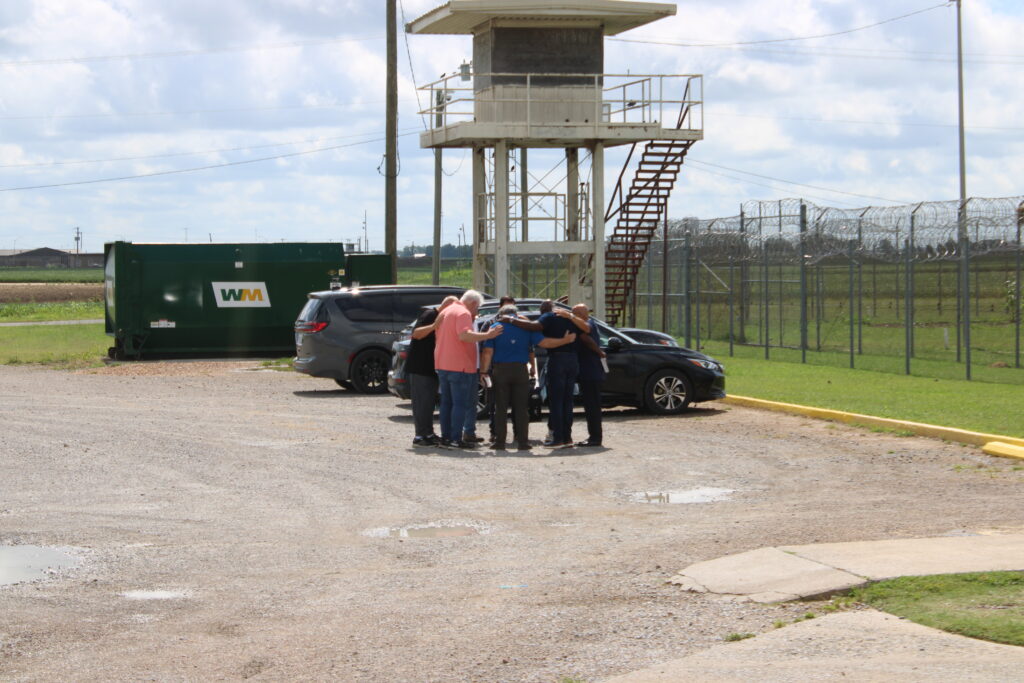 In preparation for our trip, some of us expressed concerns about having anything to offer men whose life journeys looked so different from our own. How do we, a group of comfortable suburbanites, encourage someone destined to die on those 28-square miles of land, unable to attend a parent’s funeral, a child’s wedding, or work a job in the “free world”? When we verbalized our concerns to both chaplains and field ministers (seminary-trained inmate pastors), they told us our presence mattered most—that we showed up, and especially if we came again.
The innovative prison model also surprised us. It was developed by Burl Cain, a Christian and former warden who transformed Angola Prison in Louisiana from one of the most violent prisons in the nation to a prison with a thriving church, educational opportunities, and meaningful work for inmates. Cain was invited by the state of Mississippi to oversee the entire prison system for that state. Parchman, also a violent prison, needed this man’s experience. Cain accepted the job, bringing with him wardens and chaplains from Angola whom he knew and trusted, including former inmates. He invited Chaplain Reggie Watts to join him as lead chaplain at Parchman a mere two hours after Watts walked out of prison having served 25 years.
Cain’s model raises up field ministers and leaders among the inmates to support the chaplains as they care for the spiritual needs of the 2,500 men living at Parchman. The field ministers live among the men and minister to them in their assigned units. Currently, seventeen men serve as field ministers with more undergoing training and attending seminary to join their ranks. Thirty-Eight have graduated and been sent out as missionaries to other prisons.
Trustees are another group of inmates serving in the prison. As inmates successfully handle given responsibilities, they are given more responsibility, resulting in trustee status. These men tend horses at the onsite farm, garden, drive vehicles, and walk unescorted around the property. It’s important to note, the larger perimeter of Parchman is unfenced; only the individual camps are fenced with barbed wire.
 While talking with the field ministers, we often forgot we were talking to inmates. Conversations over meals and as we moved about the prison grounds served as a high point of our trip as we learned of God’s grace in their lives. One field minister admitted to breaking into a man’s home and taking that man’s life. Another field minister’s leg shows a tattoo of the former gang where he was second in command. Yet, Christ’s redemptive work had erased their dark histories to our eyes. One field minister praised God for lifting him up, cleansing his mind and heart, and setting him in a position of honor, freedom, and responsibility within the prison. He referred to himself as a free man within the 28-square mile penitentiary.
Ten separate, vibrant churches exist at Parchman, each one housed in an individual fenced camp. We visited nine of those churches. One service took place in the rehab building where men were recovering from illness, most in wheelchairs, another service in a large gym with about 150 men. The most joyous service took place in an onsite chapel built by inmates. When we approached that building after a full day of hearing men’s stories and praying with them, our spirits felt heavy with incarcerated life, hearing about suffering families and the consequences of dark pasts.
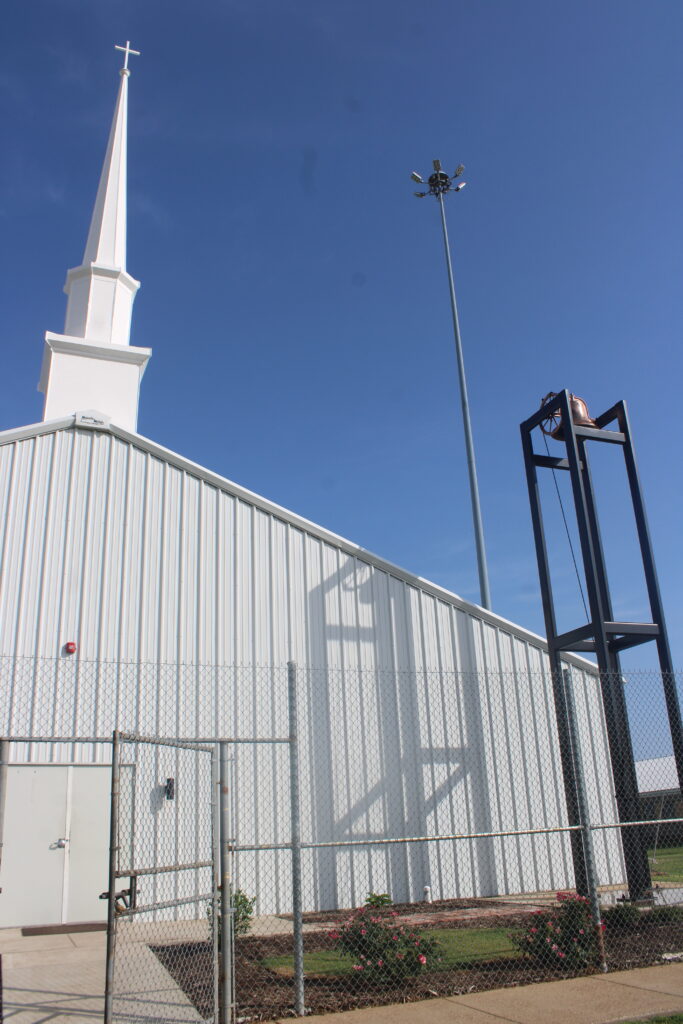
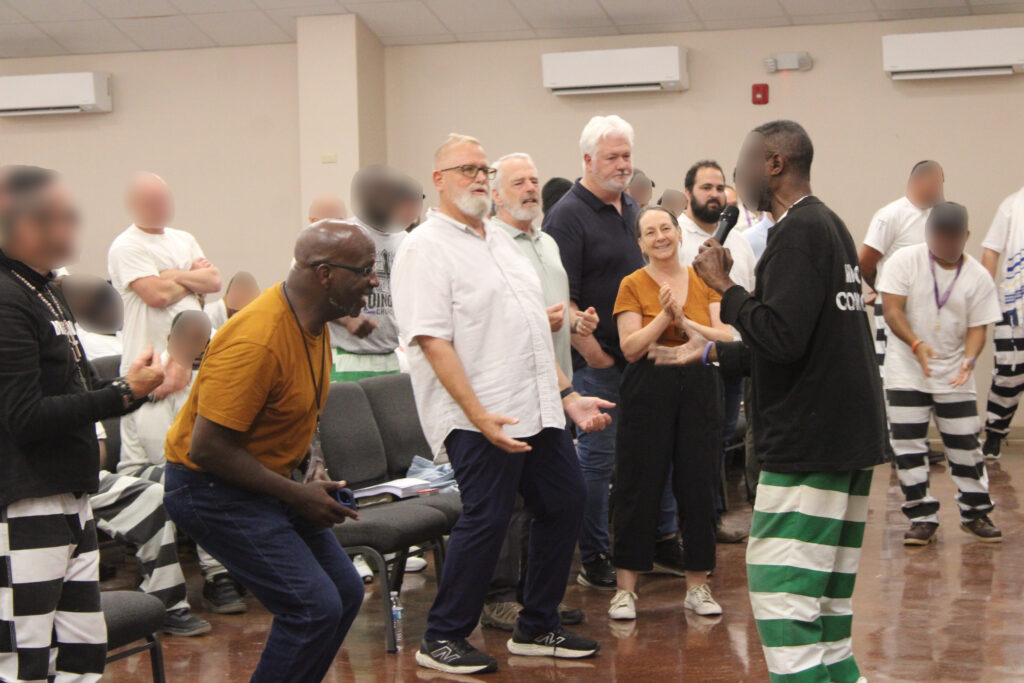 Then joyous Gospel music filled our ears as we approached the lovely, white chapel with its steeple pointing heavenward. Enthusiastic inmates welcomed us at the doors, swaying to the music. Inside, men exuberantly danced, sang, and clapped. We witnessed tattooed former Aryan Brotherhood members hugging and dancing with former gang members from all races. The worship not only lifted our spirits but reminded us how praising God with this body of believers united us all.
From that perspective, our view of each other looked the same.
While hope abounds at Parchman, we also witnessed darkness. We visited men’s bedsides in the hospital where one man needed a heart transplant he would never receive due to his life sentence. Another man had been recently diagnosed with stomach cancer. Another man had lost a leg to amputation. We prayed with these men and any others who wanted prayer. And we prayed with Chaplain Rhodes in the hospice room, asking God to allow men to die peacefully between those four walls. “No one ever dies alone here,” he had told us earlier. “We make sure someone’s with them 24 hours a day while they’re nearing the end.”
The joy of those chapel services contrasts with the darkness we experienced in Protective Custody. This unit houses men at risk of being harmed by other inmates due to their crimes or because they have enemies in the prison. Inmates lay shirtless on mattresses on the floor in complete darkness, despite the daytime hour, with curtains or blankets blocking all light from windows. Some were willing to talk and pray; others wanted nothing to do with us.
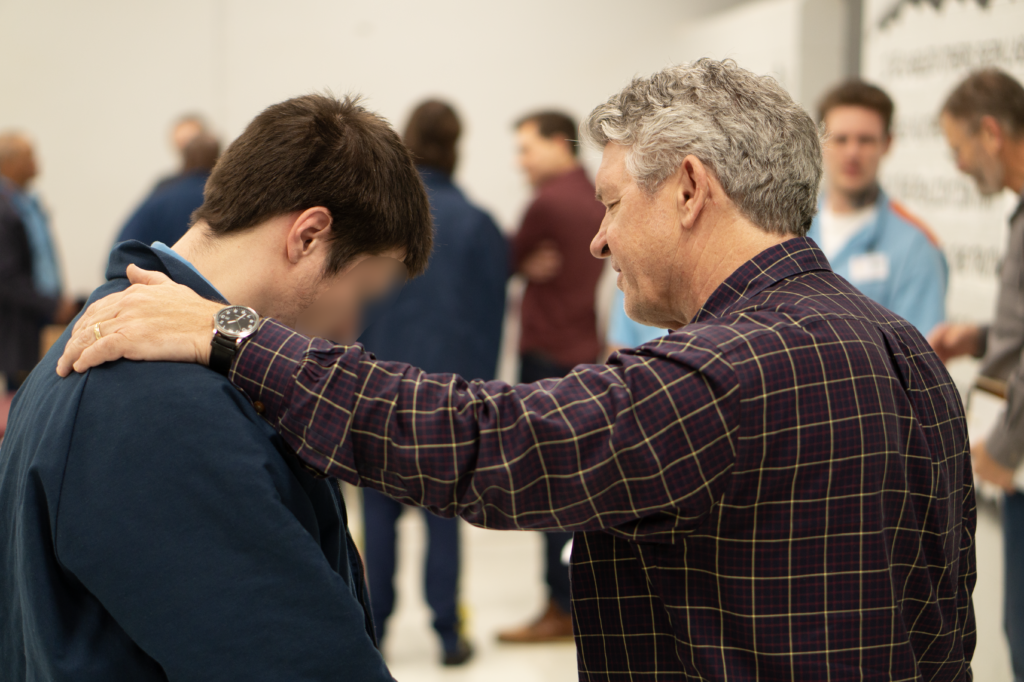 We traveled from cell to cell, praying with men. On the way to that unit, Chaplain Palmer explained how television and the news get life on the inside so wrong. Those portrayals miss out on the human element of the people behind bars—the grief experienced by both inmates and suffering families, wasted lives, and hurting victims. Seeing the dark lives of those men and hearing their heart’s desire for their mothers with cancer, their grandchildren, the seven more years they needed to serve before walking free, we grieved over the human factor.
Prison ministry fulfills the mission statement of Rez: “Inviting everyone into a transforming relationship with Jesus and his Church,” even those who have committed murder, theft, assaults, and robberies. While prison or jail ministry is not always comfortable or easy, it allows the Church on the outside to come alongside and support the growing Church within the walls. Our team didn’t visit Parchman as experts, but to serve this often forgotten segment of Christ’s Body and to support the work God is doing there.
While those of us in the free world church have gifts to offer and teachings to present the Body, the men inside also have talents to offer: musical gifts, seminary training, artistic skills, leadership ability, and gifts of teaching and encouragement. Kingdom work gives purpose to their lives.
Despite society’s view of these men, God has chosen them, pursued them, and transformed them by his grace. And he has work for them to do. Those who have been forgiven much, love much. Matthew 25:35-36 states, “I was sick and you looked after me, I was in prison and you came to visit me.” Inmates are often forgotten members of our society, even when they’ve become our brothers in the Body.
We’re grateful to be able to participate in Christ’s work with prisoners and hope others will experience this powerful ministry.
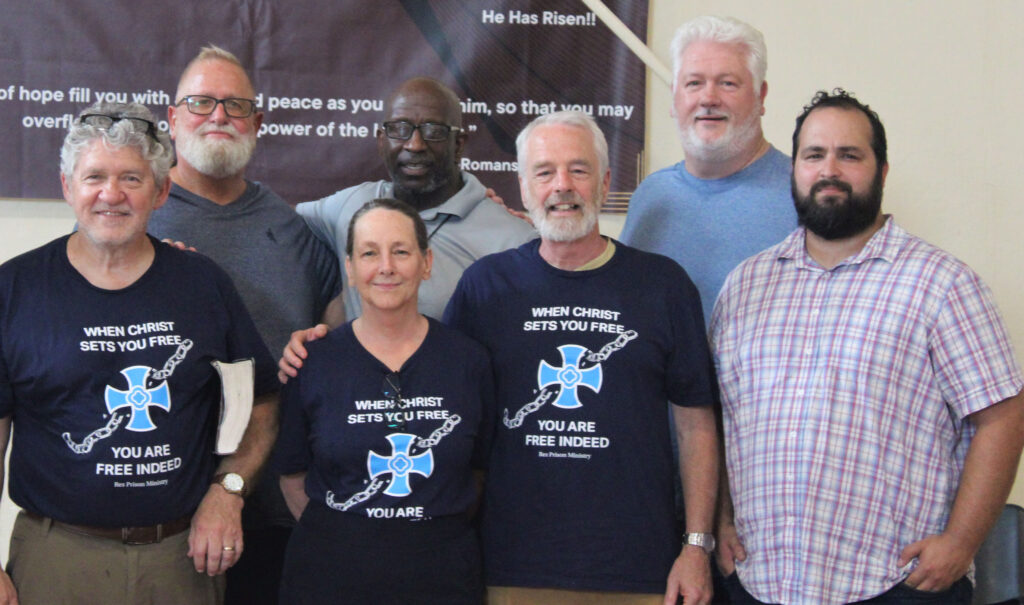
~ Bill and Linda MacKillop (center front), Mark Macy (bottom left), Tom VanderWeele (back left), John Houlihan (back right), and Dillon Moran (front right)
Learn more how you can receive prayer updates and get involved in the Rez Prison Ministry (click here).